top of page


By Stephen Ng


The more I read Cook, I realise that those of us who are in the marketing of higher education, are already fully exercising what theologians now call contextualisation.


It is basically target marketing, to put it simply -- same product for different market segments.


For example, an engineering programme at Monash University Malaysia can be targeted at students who completed different pre-university programmes.

For those who had completed their A-Levels, for example, we tell them the entry requirements based on their A-Levels results; this is not something that we would give to someone who completed his/her UEC or STPM, the other equivalents of A-Levels or Matriculation programmes. Even when we write articles for the Education Supplement pages in the local newspapers, we tailor our messages to different target groups. If we are asked to write for a children's magazine, we would talk about other more interesting things about the university. We need to know the target segments. I remember, when I was an Laboratory Manager of Union Carbide (known as Union Polymer in Malaysia) dealing with in emulsion polymers, we had one product that could be used for different applications. PVA or polyvinyl acetate (our code was UP 101) can be applied in cheap paint (e.g. ICI Matex). It was labelled 101 because PVA was the simplest of all polymers that we produced. The same emulsion polymer can also be used as adhesives for parquet flooring. So, when we go with our marketing staff to meet someone at Nippon Paints, for example, we would only talk about its application in paints. We don't talk to them about floor adhesives, or else they would kick us out of their office. Not only we talk about it as 'different products' to different customers, we label it differently. For paint manufacturers, it was UP-101 but for adhesives people, it was labelled with another code number. To make it even clearer, it is like the seminary or university that we are studying in. Some of us study Chemistry, others study Engineering, yet it is the same university, just that our experience at the same university is quite different. Likewise, we have a same theology throughout the world -- Biblical Theology -- but before it can be relevant to the people in different cultures, it must be contextualised first. Hence, this is what theologians call, "Contextual Theology" or as Cook calls it in his title, "Local theology." Exactly how this local theology can be applicable to the global church is something that is worth finding out as I continue plough through the book to explore the thoughts of different writers in the book.


Updated: Jul 7, 2022

Over the past 50 years, I have seen at least 50 different musicals on stage, some more than once. And one thing I can attest: big is definitely not always better. Starting this week, I shall rank the musicals I have seen (first seen, not subsequent) according to merit of the production. And the top spot goes to:


GODSPELL.


It is ironic indeed that despite having seen over my entire life dozens of musicals on stage, many of them spectacular, my favorite remains the very first one which also happened to be the very simplest one. I still remember like it was just yesterday.


It was 1973, I was in secondary one, and one day out of the blue, the whole school was ushered into the auditorium for a show. That show turned out to be Godspell, performed by a group from overseas. There was no prop other than a bench and maybe some items like flowers. Yet, I was mesmerized. Despite never having heard the songs, they stuck with me long after. And the message of Christian love was more effectively conveyed by the two-hour show than all the years of chapel service.


Two decades later, a Singapore theater company put on a big-budget production at the grand Victoria Theater. I was eager and excited for it, as I have been listening to the show’s song numbers over the years since 1973. Yet somehow, this production which boasted more pizzazz and better sound system failed to deliver the same charm and magic as the simple one in the school auditorium. I left disappointed.


Thanks to the earlier experience, I learned that great shows don’t necessarily need a big budget and spectacle. It’s more about connecting with the audience.


Updated: Feb 9, 2025

By Stephen Ng


Books are the best form of preserving one's legacy.


Books written a few thousand years ago are still available to us today.  In fact, much of our written history come from the scrolls that were preserved for many generations.


While digital technology can be obsoleted or get corrupted, books will never disappear if preserved properly.


To my Christian friends, you know that the Bible is one of the best preserved books through over 4500 years of history. This is because the entire Old and New Testament had been meticulously copied by the scribes and passed on from one generation to another.


The tombstones of these great men and women of the past may no longer be discovered, but their legacy lives on till today. It's is because their stories are preserved in the form of books.


Books Compared to Tombstones


Yet, many of us spend so much money on a tombstone. A plot of land at one of the more established burial grounds in Malaysia, for example, costs at least RM20,000.


Yet, to be frank, I am not sure how many generations thereafter will visit the graveyard. At the most, it is probably just once a year, but for how many generations?


Is that a legacy to be preserved for posterity?


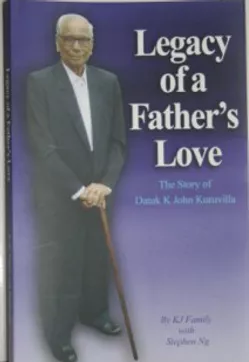
To be honest, since my father died in 1998, I hardly visited his grave at Nirvana, but the fact that I still have the book I wrote, even my teenagers who never met their grandfather are still be able to read about him. In the future, they can even pass the book to their children and grandchildren. Isn't that wonderful?


Value for Your Money

These days, it is not expensive to have your book written. Because we are a team of writers, editors and graphic artists who operate on low overheads, we can do your book at a cost not more than RM25,000. Of course, it depends on how massive a project it is.


There are tycoons who paid over RM100,000 for their books. I have in recent years been commissioned to write a book where the business entrepreneur paid me handsomely for my writing fees.


I find it hard to understand when the rich can afford RM120,000 for a car that will last them only 20 years at the most, but they would not fork out RM30,000, especially when it can be paid progressively. At the end of the day, it is the value that you place for your own legacy.


Scope of Work

The most tedious part is in the writing itself. The cost will depend on a lot of factors:

  • How thick a book you are looking at;

  • How fast you want the book done. It is cheaper if you have a shorter time frame than one that drags on for years;

  • How much material you able to provide to us;

  • How many interview sessions would be required, and whether it can be done on Zoom or it must be physical meetings.


After the writing is done, you will also need to decide:

  • How many photographs? This will affect the number of pages;

  • How many copies of the book you would like to print;

  • An editor and a few proofreaders who can further enhance the writing.


Every major publisher in the world would have a team of professionals who handle different stages of the work. Even the cover design is decided by a team of people who are involved in the marketing of the book. They meet several rounds just to discuss how to further enhance the cover design before a decision is made.


This is why these publishers have to print a few hundred thousand copies of the book to drive down the cost of each book. And their mark-up is a few hundred percent of their production overheads. After they have sold a certain number of copies and made the targeted profits, the remaining books will be sold in bulk to wholesalers like Big Bad Wolf for a pittance.


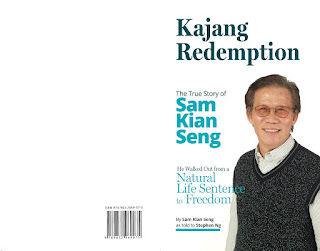
Please write to me or Whatsapp/call Stephen Ng 012-3347880 to discuss if you are interested to have a biography or autobiography written for a family member. Even the biography of a deceased can be written by interviewing the siblings.


bottom of page